The Most Far Felt Legacy Of President Thomas S. Monson
The Most Far Felt Legacy Of President Thomas S. Monson
President Thomas S. Monson will be remembered for many things, from his stories to his personal ministry to the one, the historic lowering of the age of missionaries; to the announced, dedicated, and renovated more temples. Truly Thomas S. Monson spent his life in service. But one of the most lasting legacies of President Monson will leave for the church will be his efforts to bring us new scriptures.
Before his call into the leadership of the Church President Monson was a printer by trade and worked with the Deseret News printing department. Seeing this skill in the 1970's Elder Thomas S. Monson was called by President Spencer W. Kimball to be the chairman of the Scriptures Publications Committee.

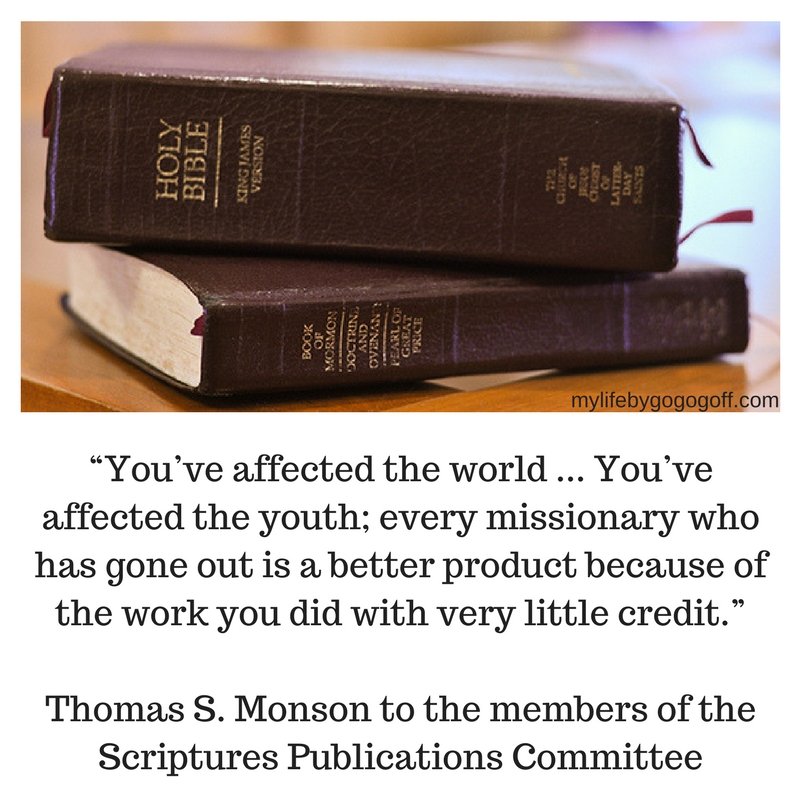
Other members included Elders Bruce R. McConkie and Boyd K. Packer among many others. The task they were charged with? Produce a new canon of scriptures for the Church. Up until this point, the Church was using bibles printed by other denominations with their footnotes and commentary. Commenting on their work President Monson declared to the committee members: “You’ve affected the world ... You’ve affected the youth; every missionary who has gone out is a better product because of the work you did with very little credit.”
A New Study Helps For The Holy Bible.
This would the first time that there would be a Latter-day Saint edition of the Bible. Printed for the church by the Cambridge Press. But the Church was not merely printing a red letter Bible. To quote from President Boyd K. Packer:
"The Cambridge Press had been publishing the King James Bible since the first edition in 1611, but they had never been asked to do anything like this. The text was to remain exactly as it was, no changes, not one. But all footnoting, cross-references, chapter introductions, indexes, and so on, were to be replaced. Only the chapter and verse numbering for the sixty-six books would be retained.
And that was just the beginning. This edition of the Bible would be cross-referenced with three other books of scripture: the Book of Mormon, the Doctrine and Covenants, and the Pearl of Great Price. The printers had barely heard of them.
But there was more. A new, innovative system of footnoting was to be used. Instead of progressing from A to Z in each chapter, the letters would start over in every verse, for innumerable verses would have many footnotes in them.
The technical problems seemed insurmountable. Computers could help, but there was always the human factor. How could you cross-reference the Bible with any other book? To cross-reference it with the three volumes was to require tens of thousands of footnotes. Thereafter there would be hundreds of thousands of possible combinations of information. It was too big even to think about. The technical challenge alone was staggering, to say nothing of maintaining accuracy, harmony, and consistency with the biblical text itself. It could not be done!"
"Scripture" Oct 1982
But nothing is impossible to the Lord. Besides the printing logistics, there was actually compiling the footnotes, a Bible Dictionary, and a Topical Guide cross referencing all four standard works. But the painstaking work moved forward. When asked for a report on the topical guide progress the reply was “We have been through Heaven and Hell, past Love and Lust, and now we’re working toward Repentance.”
With the Bible, the concern grew that it would be to large for every day use, but President Monson's expertise came into play when he suggested a different type of paper half the thickness yet still durable. This allowed the new study helps to be included without making the bible unrealistically large.
The Addition Of The Joseph Smith Translation.
Besides including new footnotes, a Topical Guide, and Bible Dictionary, there was the addition of the Joseph Smith Translation of the Bible. The RLDS Church (now known as the Comunity of Christ) owned the copyright for the Joseph Smith Translation of the Bible. One of the most important works of Joseph Smith was lost to the Church when Emma refused to give the translation to Brigham Young and instead kept it, eventually the RLDS church copyrighted and published it. And until the 1970's the general membership of the Church knew nothing about the JST.
Due to the cultivated relationship between Robert J. Matthews (a member of the scripture committee) and the RLDS the scripture committee gained permission to use excerpts from the JST. Of the over 3,400 changed made by Joseph Smith, the RLDS Church allowed the scripture committee to use the 600 most doctrinally significant changes as footnotes in the new Bible. After over 7 years of working in 1979, the Latter-day Saint Edition of the Bible was printed for the first time, forever changing the Church.
And in 2013 the Community of Christ church (formerly RLDS) gave permission for the Church add more JST to the newest edition of the Bible. Including 14 new or revised entries in the appendix (“Excepts too lengthy for inclusion in the footnotes”) 42 new or revised JST footnotes, and new JST quotations into 44 footnotes.
Of the Joseph Smith translation Bruce R. McConkie has said:
"The Joseph Smith Translation, or Inspired Version, is a thousand times over the best Bible now existing on earth"

*Special Thanks to my Institute Teacher Dr. Ronald Bartholomew for sharing his research on this topic
A Revised Book of Mormon, Doctrine & Covenants, and The Pearl of Great Price.
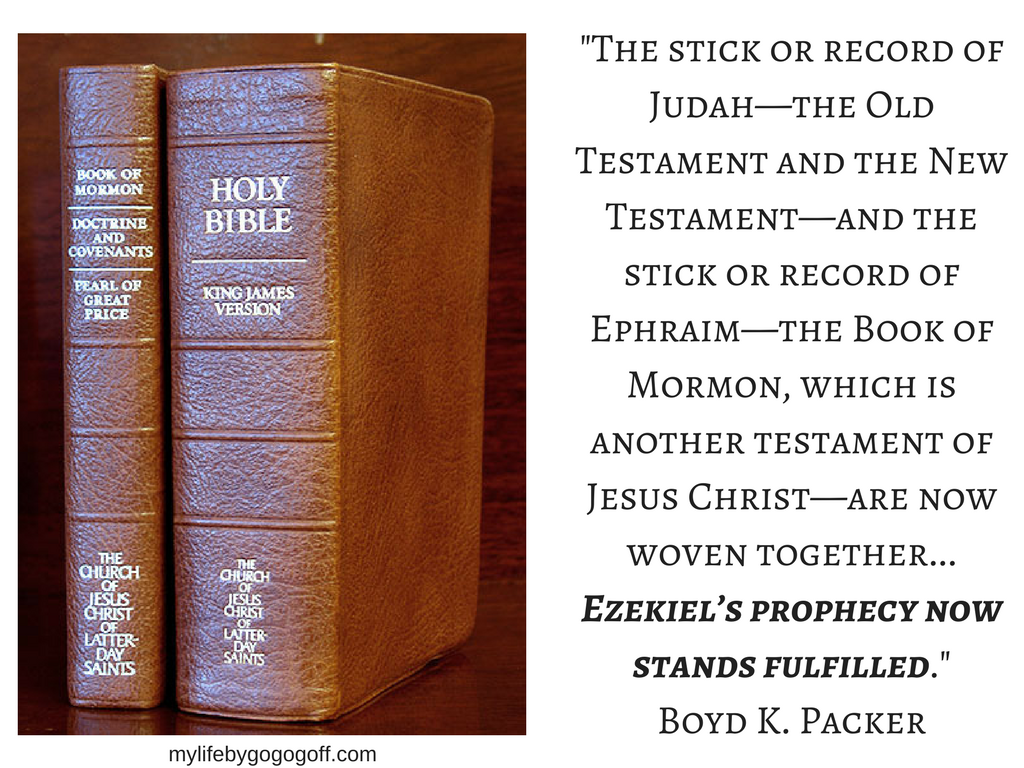
Besides all the effort and work put into the cross-referencing of the bible was also work on the Book of Mormon, Doctrine & Covenants, and The Pearl of Great Price. With the Book of Mormon, efforts were focused on aligning it with the earliest manuscripts to correct errors that had crept in during printing. Also, a subtitle was added "Another Testament of Jesus Christ." And two revelations and Official Declaration 2 were also added to the Doctrine and Covenants as part of this effort. Finally, in 1981 the new canon of scriptures was revealed. Commenting on the Bible and the Book of Mormon now being printed together for the first time President Boyd K. Packer declared:
"The stick or record of Judah—the Old Testament and the New Testament—and the stick or record of Ephraim—the Book of Mormon, which is another testament of Jesus Christ—are now woven together...Ezekiel’s prophecy now stands fulfilled."
Above and beyond the Scripture committees efforts of the 1970's President Monson also directed a revision of the indexes, and footnotes and visual aids, including updates to the Bible Dictionary in the 2014 new edition of the scriptures.
For more about his work on the Church scripture committee, see this article by ChurchOfJesusChrist.org