
How President Nelson's example teaches us to never turn down callings
Recently I was sitting in a Stake Priesthood Leadership meeting while my Stake President, President Dallan, called us to repentance over how we approached callings. President Dallin is relatively new and told us that he would like to share a story that he was told when he was called to be a Stake President, the story goes as follows:
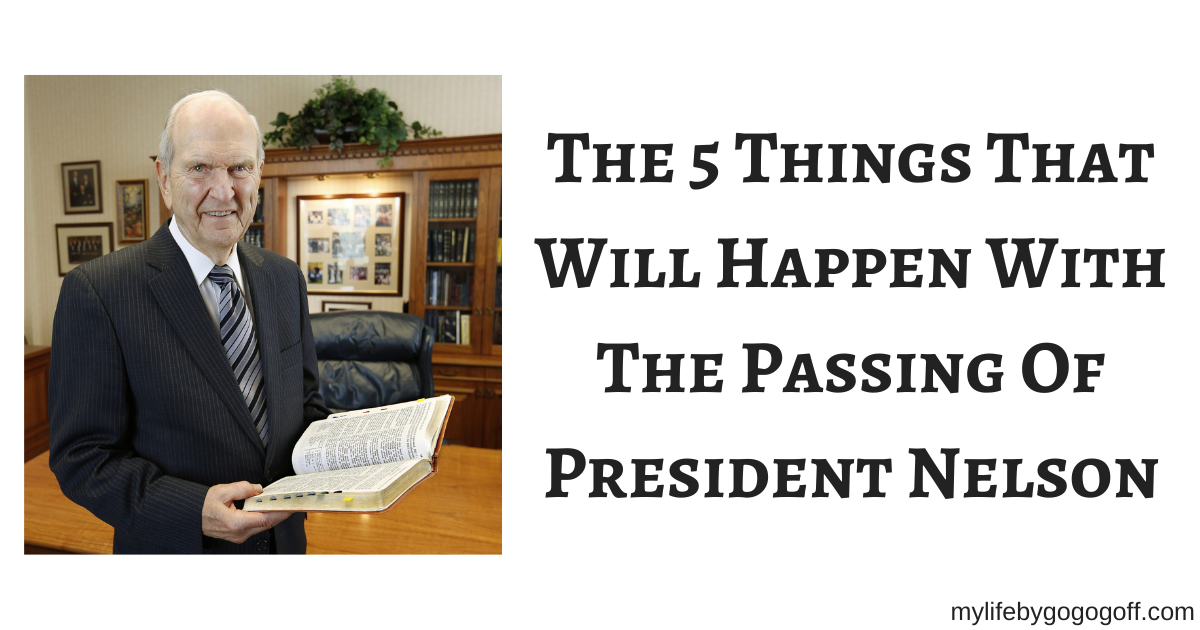
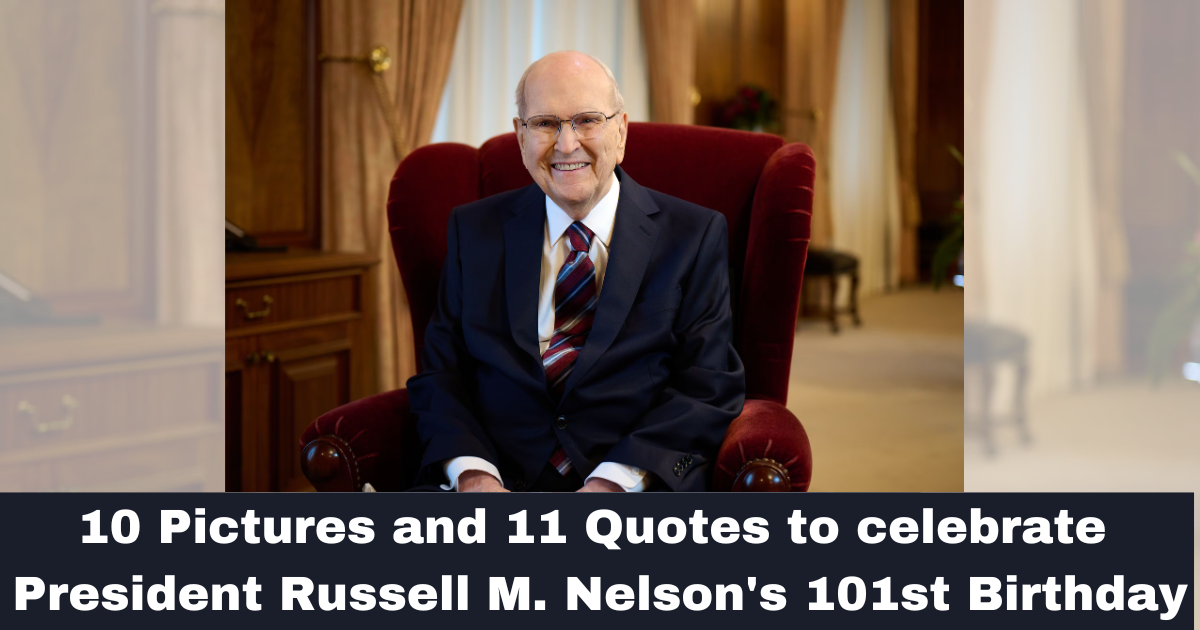
In 1964, then Elder's Spencer W. Kimball and LeGrand Richards of the Quorum of the Twelve Apostles were reorganizing a Stake Presidency in Salt Lake City. As usual, they met with various Stake leaders asking for recommendations on who to interview to be the next Stake President. Repeatedly the name 'Russell M. Nelson' came up, but repeatedly they were also told, "But he is too busy with his work." or "He is at the height of his career being a heart surgeon." So they passed by him.
But Elder's Kimball and Richards kept feeling like they needed to interview Russell M. Nelson and that he should be the Stake President. So they called him into the office and they explained that they knew who he was and that he was in the height of his career as a heart surgeon, and if he was too busy they understood. And within that context, they asked him if he would be willing to serve as the Stake President. Russell M. Nelson replied, "I already made this decision in 1945 when I was endowed. I will keep my covenants to consecrate my time and talents unto the Lord. If I need to find a new career to serve, I will." (This story was also shared in the Ensign, "President Russell M. Nelson: Guided, Prepared, Committed")
As President Dallin relayed this story the Spirit was so strong it was almost palpable, and it hit me, in 1984 when he was called to be an apostle he put his money where his mouth was and did give up his career to serve! Another thought came racing into my mind, "The call to serve is merely your Judge in Israel asking if you will honor your covenants." It was followed by a quote from Elder Robert C. Gay from another Stake Conference when he said, "Life is ultimately the choice about whether you are going to live by covenant or convenience."

President Dallin went on to talk about the excuses we make as to why we can't serve, or when we do agree to serve, why we too often put in minimal efforts. He said, "Of course your job, family, and hobbies are important, but if they become more important than our covenants, that is when we have our priorities mixed up. At the end of the meeting, he then posed the question, "Are we truly keeping our covenants if we do the minimum? Brethren, we can, and must, do more. "
I loved this story as it rebuttals a cultural issue we have within the Church, namely where we believe the call to serve should be convenient. We think that if it conflicts with work, school, hobbies, or takes one away from their family, aka building our kingdom, then we are justified in turning down the call to keep our covenants to build His Kingdom.
Callings are rarely convenient. I think of Brigham Young and Heber C Kimball being called as missionaries to England, they were called to leave their sick families and build His Kingdom. Did they rationalize why they could not keep their covenants? No! And they had more valid 'excuses' than any of us will ever have; they were deathly sick, their wives were deathly ill, their kids were deathly ill, who would provide for their families? They were walking away from their jobs, and they might even die on the journey! But instead, they kept their covenants. Not only did they keep their covenants they decided that they wanted to give their wives a cheer and so as they were being carried out on wagons they rose to their feet and yelled, "Hurrah, Hurrah, Hurrah For Israel!" And their wives came to the door so that each other last sight was of the other standing rather than lying sick in bed.
Let us follow the example of the faithful and live by covenant rather than convenience. In the words of President Ballard, "Opportunities to serve others in meaningful ways, as we have covenanted to do, rarely come at convenient times. But there is no spiritual power in living by convenience. The power comes as we keep our covenants."
M. Russell Ballard, April 1999.



This story make my testimony stronger n stronger about our covenants n also our calling to serve in his vineyard
I love our Prophet of Heavenly Father. He works so hard and the Lord gives his words to him to give to all worthy saints. I am grateful for the Gospel of Jesus Christ. The teachings are perfection. There is no other way to live as far as I am concerned. I thank the Lord each day and night for giving all the world a Prophet to live and learn by.
My observation that the Lord will support us immensely, if we serve diligently. We may not be aware of all those times He was there helping us along. What might seem to be an impossible task will become manageable, as "but with God all things are possible" (Mark 19:26). If we decline opportunities to serve, we miss those blessings Heavenly Father has in store for us.
Your blog is wonderful! Spot on with so many current issues we deal with. Don’t stop!
I love our living prophet President Russel M. Nelson.I would like to share my thought about covenant.
The covenant that we received when we are baptized are first Take the name of our Lord Jesus Christ second Always Remember Him And Keep His Commandments.One thing that we show to our Savior that we do our covenant is by accepting calling.
I have never turned down a calling even when I was bedridden because of chronic illness although I've on more than one occasion gone home and wept. And I have always tried to give 110 % even if it meant having to go to bed afterwards, but spiritually I have always felt blessed.
I agree that we should receive callings with more exclamation that questions and I have done that. Having been secretary for several bishoprics through the years I know that some callings are more inspiration and some are more practical or convenient, and some are just matter of fact decisions. Are we under obligation to accept a “convenient” calling? I think an important part of this story is that Nelson communicates the barriers he had that may get in the way of such a busy calling. The Priesthood Leader, Kimball, considered the factors and still felt inspired to issue the calling. There is a responsibility on the part of the leader who issues the call to explain the inspiration and reasons they feel this is the right thing and give the member a chance to feel what is right. I have had a number of callings, important ones, that were issued off the cuff and I used to think that I was under obligation to take them all no matter what. Now I know to consider more factors and seek my own confirmation. When a calling is issued haphazardly it can lead to questioning if it was inspiration or desperation. Especially if it’s a hard calling. If all callings were handled with more respect and desire to communicate the spirit of inspiration I think more people would accept. I have been blessed for my efforts, but I think there is room for improvement on both the issuing side and the receiving side.
@Dan, I appreciate your comments. May I add a perspective about callings that might come less by inspiration and more by desperation? I remember my mom being the one to accept callings that no-one in the ward else would accept, so she was called as the teacher of a primary class of five uncontrollable boys, and as early morning seminary teacher, etc. She accepted them and gave them her all for many years, and despite being a mother of seven, going back to school as a full-time college student at the time, she prepared her Seminary lesson every night so she could get up to teach by 6:30 AM - for years. It is what we do. I like that statement above where a calling is when we show the Lord we are willing to keep our covenants. So, perhaps I ESPECIALLY want to show God that I will serve when the calling may be from desperation, because I WANT to show Him that He can count on me no matter what. If our love for Him is unconditional, we do whatever we are asked gladly, no matter what conditions might surround it. No conditions. Just a thought.
I asked to be released from a calling once. I struggled over the decision for months because I was raised to believe that you have to power through and fulfill your calling NO MATTER WHAT. But we were in the middle of a contested adoption (among a great many other things at the time) and my stress levels were through the roof. I prayed and prayed my heart out for the strength to keep my calling in the primary presidency. I ultimately asked for a priesthood blessing. Instead of the answer I thought I was going to get (stick it out, the Lord is with you, this too shall pass...), I was told that the lesson I need to learn was not how to punish myself into compliance. The lesson I needed to learn was how to say no. I asked to be released and had an overwhelming spiritual confirmation that I had done the right thing and the Lord was pleased with my decision. The Lord had other people he could call into the presidency. My family had only one mother and at that particular time my family needed to be my priority.
I truly am a big believer in serving as much as you can in the church, but what I learned is that healthy boundaries are important too. We are commanded to serve. We are also commanded not to run faster than we have strength. We forget sometimes that pushing ourselves to the point of collapse isn’t healthy, and the Lord doesn't ask us to do things that aren't healthy. Her cares as much (or more) about our physical, mental, and emotional health as he does our church callings. There are times when the best way to fulfill your covenants is to take care of your first and only permanent stewardship in life – you. It’s not selfish to say no when it’s done with prayer and a willingness to serve when possible. But sometimes it’s not possible.
I like the use of the word "willingness". I once heard a story of a woman who had anxiety who willingly accepted her call to work with the young women, but almost immediately suffered from anxiety attacks. The Bishop recognized her struggle and immediately released her, knowing that he could call others to help. She was willing and obedient, and God had tested her to see if she would accept it, in spite of her struggles with anxiety.
My father was baptized in 1937 at the age of 8 in West Germany, shortly after my grandmother joined the church, so for all intents and purposes his was a convert family. My mother joined the church in East Germany and escaped to the west in the early 1950's, serving a mission in Frankfurt while waiting for permission to emigrate to either the United States or Canada. Though they were acquainted while still in Germany, my parents courted and married in Los Angeles in the late 1950's. They were fiercely loyal to the kingdom of God, and they raised my brothers and me to accept whatever callings might come our way.
Twenty years ago my wife and I were living in Southern California, and we became part of a new ward which was formed from pieces of two other wards. No one in the newly called bishopric had been part of the ward we came out of, and they scrambled to interview everyone they didn't know so they could get a feel for what kinds of callings might be extended to everyone. Until that point in my adult life, nearly every calling I had had was in music (ward organist, priesthood pianist, Primary pianist, choir director), and only in the recent couple of years had I been blessed to serve in an Elders Quorum. While interviewing with the elderly 1st counselor, I told him of my past callings and inserted a humble plea to consider me for anything other than a music calling. Not long afterward, the 2nd counselor in the bishopric met with me and my wife to extend callings. Turning to me he extended a calling to become the Ward Music Chairman. My heart sunk. My facial expression must have been pretty transparent, because he asked me about it. I told him that I was raised to accept any calling - and that I would accept this one as well - but that I had hoped to avoid a music calling and had communicated this to the other counselor. This inspired leader didn't put me in a position to accept a calling that he now knew I would dread. He told me that he was going to temporarily withdraw the calling and confer with the bishopric, which ultimately decided not to extend that particular call after all and instead plugged me in as EQ secretary, which turned out to be very fulfilling.
I'm grateful for parents who taught their sons the importance of accepting the calls which come from priesthood leaders, and I'm also grateful for priesthood leaders who have been perceptive and enabled me to grow in the gospel through all of the diverse callings I have received over the years, including subsequent music callings which came along.
I have not been able to live up to this expectation. I wish I was worthy of being able to fulfill my priesthood duties like I'm taught by the Brethren. I'm worthless.
No, Jason, you are not worthless.Please, go talk to your bishop or elders quorum president. Either can help guide you to understanding and growth. I don't know your problems, but I have a firm testimony that we are God's children and that makes us of infinite worth. Please, ask for a blessing and spend some time in prayer and study. Listen and the Lord will help you. No matter where you are on the gospel path, hold on and keep moving forward.
The story is very touching. in fact, as we do what the Lord commands, we would be blessed even as Nephi explained to his father. The Lord always provide ways for us to accomplish His task.